BACKGROUND
Limited Access to Education for Children with Disabilities Before the 1970s
In the early 1970s, children with cognitive impairments faced significant barriers to accessing public education. State laws allowed schools to deny education to children who had not reached a mental age of five by the time they were eight years old. U.S. schools educated only one in five children with disabilities. This exclusionary practice left many children without the opportunity to learn and develop in a supportive educational environment.
"I was ridiculed, I was teased. But I learned how to deal with that from a very early age and I did deal with it. I didn’t allow myself to be bullied, but not in a confrontational way… if children laughed at me, I laughed at them. If they said to me, ‘Oh, you walk funny – you walk like this.’ I’d go, ‘No, no, you’re doing it wrong. This is how I walk.’ And I’d put it on even more."
- Wellcome Collection, 1960s
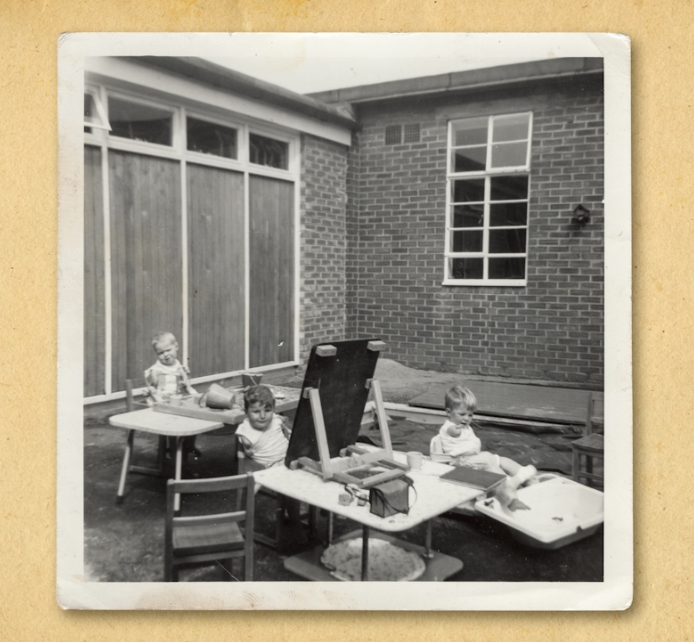
Children left outside school encouraged to rest and play, 1960s, Wellcome Collection.
Special Education
Legal and Social Barriers
Some children were placed in special institutions or asylums, which were often overcrowded and provided minimal educational opportunities. These institutions focused more on custodial care rather than education.
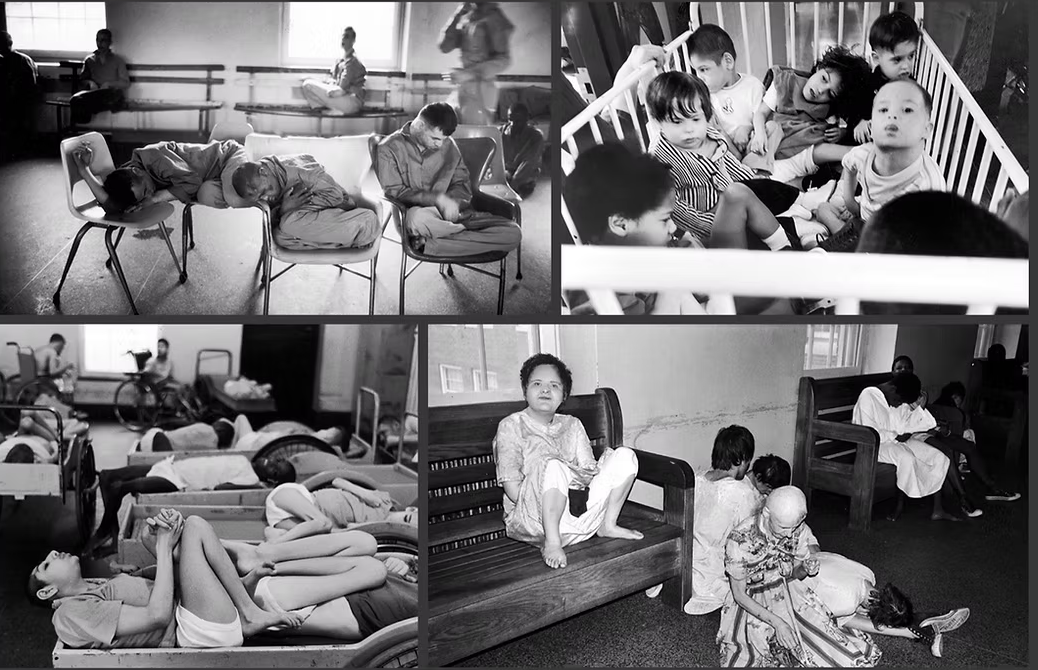
The Willowbrook Institute on Staten Island in early 1900s, New York, April 7, 2017, New York Daily News.
The legal framework did not support the inclusion of children with disabilities in public education. Without federal legislation, states and districts had no obligation to provide services. Social stigmas and beliefs that these children couldn't benefit from education furthered their exclusion. Families faced high costs for private education, leaving most children homebound without formal instruction.
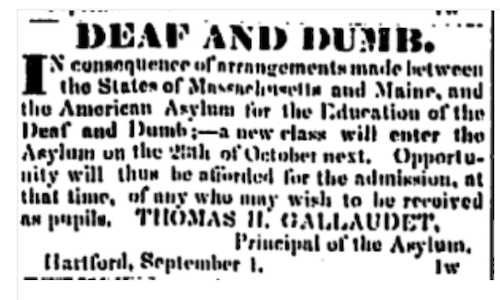
Advertisement for the Asylum for the Education of the Deaf and Dumb,
September 8, 1829, WrightlsLaw.
"Kevin was denied access to the local primary school where his brothers and sisters had gone and instead went to Greenbank School of Rest and Recovery from the age of four to seven. It was just a place to contain disabled people, and maybe give the parents a bit of a respite. But the education was… way down the bottom of the list of priorities. He was educated with kids from age four and a half to sixteen with all different disabilities and impairments in the same room."
- Wellcome Collection, 1960s
Pennhurst State School and Hospital and the Push for Advocacy
From 1903 to 1950, Pennhurst State School and Hospital reflected society’s practice of institutionalizing children with disabilities rather than providing educational opportunities. Its conditions and treatment of residents later led to the formation of advocacy groups.
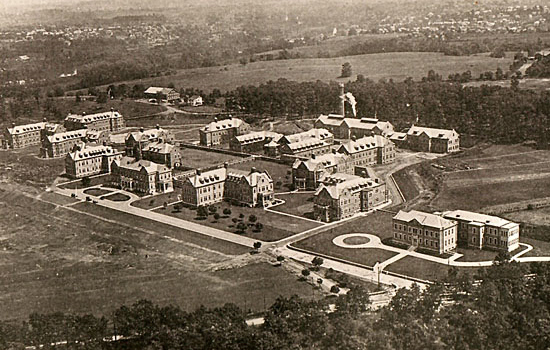
View of Pennhurst Campus, 1934, NPR.
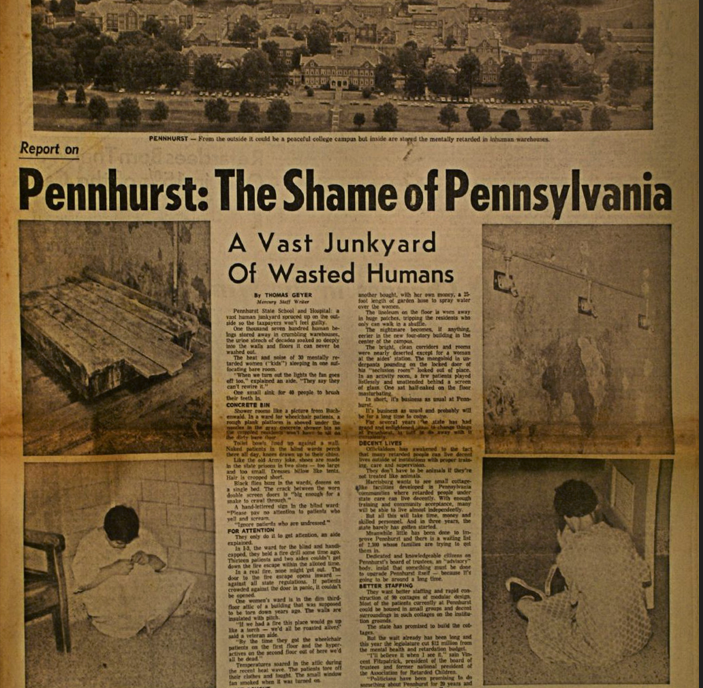
Article published on Pennhurst, August 8, 1972, Antiquity Echoes.
"Massive custodial institutions were built to warehouse the retarded for life. The aim was to halt reproduction of the retarded and nearly extinguish their race."
- Justice Thurgood Marshall, 1985